A calm, guided rhythm for your homeschool week.
![[background image] image of cozy reading nook (for an author & writer)](https://cdn.prod.website-files.com/69dbe348d0a29252603f7d2c/6a373335c6dfc3b9404fd42f_Havenwood%20Rhythm%20June%20002%20cover%20image.png)
A Gentle Week, Made Simple
A calm rhythm designed to bring beauty, wonder, and meaningful work into your homeschool day.
This weekly rhythm is meant to give your family a gentle shape to the week without adding more to your plate.
There is no need to complete everything. Choose what fits. A few simple, intentional experiences are enough.
This week includes three guided days, each with a gentle path you can follow or simplify: a morning gathering, one hands-on experience, meaningful work, time outside, quiet work, and a simple reflection.
Follow the rhythm, not the clock.
Early Summer Weekly Rhythm
Day One
Today we notice what feels warm, cool, sunny, and still.
Morning Gathering
Let this gently open the day.
Begin near a window, table, or quiet outdoor spot.
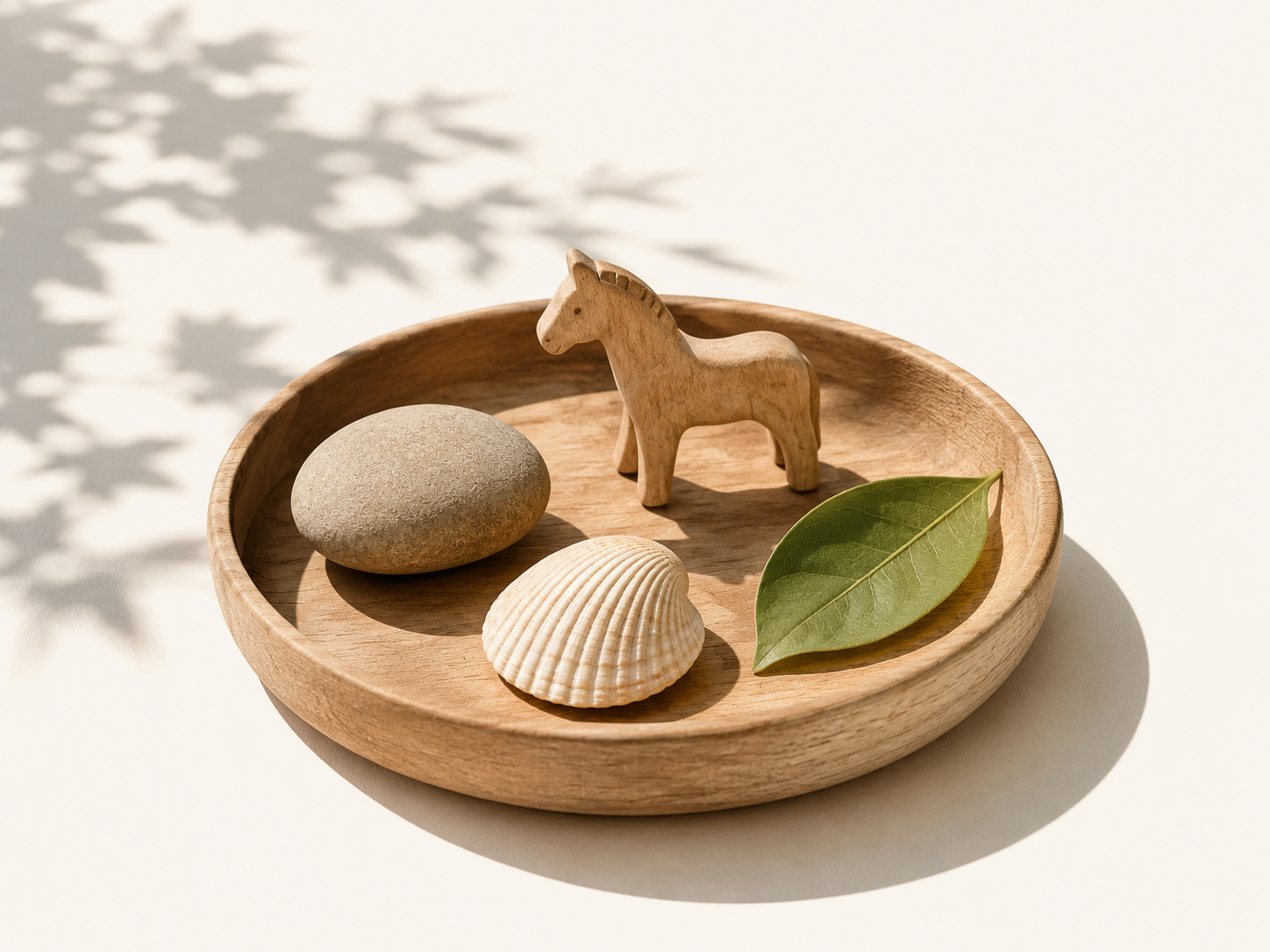
Place one small seasonal object in the center: a smooth stone, leaf, shell, flower, small bowl of water, or folded cloth.
Speak together:
Morning sun is warm and bright,
Touching leaves with golden light.
Shade is waiting, cool and still,
By the tree and windowsill.
Sun and shadow, side by side,
Give us places to rest and hide.
Pause for a moment.
Then ask:
Where do you see sunlight today?
A window. A leaf. The sky. A place on the floor. Your child’s own hands.
Anything is enough.
Core Experience
Gather Sun and Shade
A simple way to gather, touch, and notice sun and shade.
You’ll need:
- A small basket, bowl, or tray
- A few simple things: a stone, leaf, shell, spoon, block, flower, pinecone, or small toy
- A sunny spot
- A shady spot
Invite your child to gather a few small things.
They might choose a stone, a leaf, a flower, a spoon, a toy animal, or anything simple nearby.
Place the basket or tray near a sunny spot.
Let your child place one or two things in the sun.
Then place one or two things in the shade.
After a few minutes, return together.
If anything feels too hot, leave it where it is and simply notice.
Touch the objects gently.
You might wonder aloud:
Which one feels warm?
Notice what changed.
Which one stayed cool?
What should we leave in the shade?
Let your child move things back and forth.
Maybe the stone belongs in the sun.
Maybe the toy animal needs shade.
Maybe the leaf feels just right where it is.
There is no need to sort anything perfectly.
There is no need to teach the science.
The gathering, touching, noticing, and wondering are enough.
When interest fades, return the objects or leave the basket nearby for a little while.
The experience is complete.
Meaningful Work
Care for a Summer Day
Invite your child into one small act of real work that helps the day feel cared for.
Choose one:
- Help pour water for snack or lunch
- Wash fruit for snack
- Bring napkins to the table
- Water one plant
- Put shoes or hats by the door before going outside
Move slowly.
Let your child participate fully.
These small acts help children feel capable, included, and part of the family rhythm.
Outdoor Invitation
Find Sun and Shade
Step outside together and look for sunny and shady places.
You might notice:
- A sunny step
- A shady tree
- A warm stone
- A cool patch of grass
- A bright flower
- A shadow under a chair
- A shady place near the house
Walk slowly.
Choose one sunny place and one shady place.
Stand or sit in each for a moment.
You can ask:
How does this place feel?
Or:
Where would you like to rest for a minute?
Let shade, water, and rest be part of the rhythm.
One simple moment outside is enough.
Quiet Work
Warm and Cool Colors
Simple coloring, quiet observation, and gentle creativity.
You’ll need:
- Paper
- Crayons, colored pencils, or watercolor
Invite your child to make a simple warm and cool page.
They might use sunny colors.
They might use shady colors.
They might make:
- Yellow marks
- Blue patches
- A warm circle
- A cool corner
- A bright side and a quiet side
- Soft colors across the page
You can say:
Can one part of your page feel sunny?
Can one part feel shady?
It does not need to look like anything.
Sit nearby without directing the outcome.
When the page feels complete, set it aside.
The work is finished.
Small Reflection
Simple questions help children revisit and deepen their discoveries.
Later in the day, perhaps at lunch or bedtime, ask:
What felt warm today?
Or:
Where did you find shade?
For older children:
What changed when something sat in the sun or shade?
No formal answer is needed.
The question is enough.
Day Two
Today we make a small place of shelter and rest.
Morning Gathering
Begin near a window, table, or quiet outdoor spot.
Place one small object in the center: a cloth, leaf, basket, small toy, block, shell, or cup.
Speak together:
Sun above and earth below,
Summer light begins to glow.
A little shade, a quiet place,
A softer spot, a slower pace.
We can build with what is there,
A little shelter made with care.
Pause for a moment.
Then ask:
Who or what might need a shady place today?
A doll. A stuffed animal. A toy. A plant. A book. A child who needs a rest.
Anything is enough.
Core Experience
Make a Little Shade
A simple hands-on project for shelter, care, and imagination.
Choose a few simple things you already have:
- A towel, blanket, scarf, dish towel, or cloth napkin
- A chair, table, basket, box, branch, or stick
- Clothespins, clips, or tape, if helpful
- A toy, doll, small plant, or book
Invite your child to make one little shady place.
It might be:
- A shade tent for a stuffed animal
- A cool resting spot for a toy
- A shady reading corner
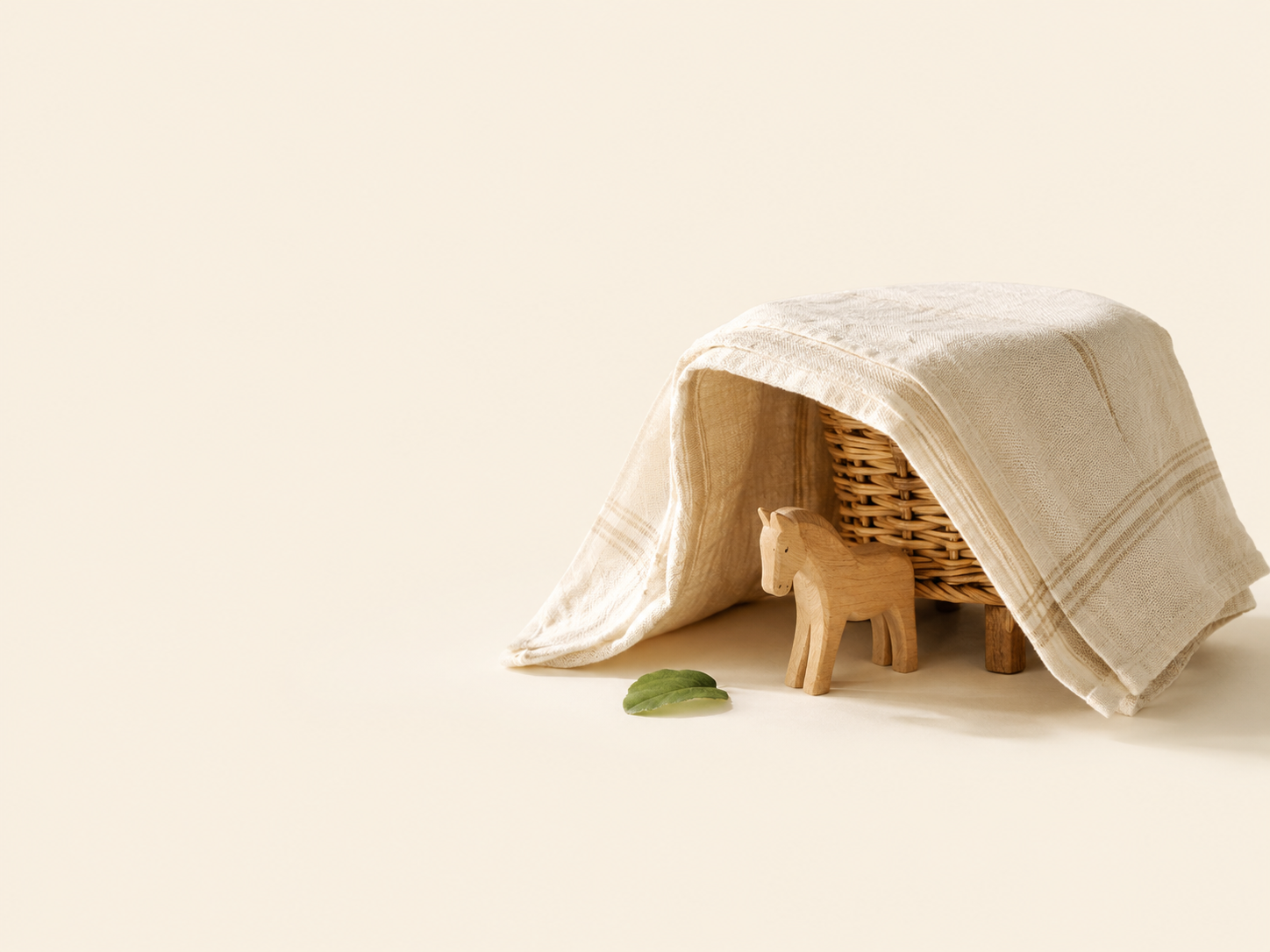
- A cloth roof over a basket
- A shelter for a little plant
- A cozy spot under a chair
Let the first version be simple.
A towel over two chairs is enough.
A blanket over the side of a table is enough.
A dish towel over a small basket is enough.
A big leaf over a tiny toy is enough.
You might wonder aloud:
Where is the shade?
Who could rest here?
Is it big enough?
Let your child try one small change if they want to.
Move the towel.
Add a book.
Bring the toy inside.
Make the shade bigger or smaller.
There is no need for the shelter to be sturdy or beautiful.
If it makes a little shade, it is enough.
The making, caring, and imagining are the work.
Meaningful Work
Prepare a Resting Place
Invite your child into one small act of real work connected to comfort and care.
Choose one:
- Spread a blanket in a shady spot
- Carry a book outside
- Bring water to the porch or yard
- Shake out a towel
- Water a plant after time in the sun
- Fold the towel or blanket when you are finished
Let your child help with the beginning and the ending.
This helps children feel that their help matters.
Outdoor Invitation
Rest in the Shade
Step outside and find a comfortable shady place.
You might look under:
- A tree
- A porch
- A chair
- A table
- A large plant
- The side of the house
- A towel or blanket
Sit together for a few minutes.
You do not need to do much.
Listen.
Notice.
Let your child settle.
You might ask:
What can we hear from this shady place?
Or:
What can we see from here?
Maybe you hear birds.
Maybe you see leaves moving.
Maybe your child wants to bring a toy into the shade.
Follow their interest.
The quiet pause is enough.
Quiet Work
A Shady Story
A simple moment of rest, closeness, and quiet.
You’ll need:
- One book
- A cozy or shady place
Invite your child to choose one book.
Bring it to a quiet spot.
It might be outside in the shade, near a window, on a blanket, or under the small shelter your child made.
Read a few pages together.
Or let your child look quietly while you sit nearby.
You can say:
Where should we sit so this feels restful?
There is no need to finish the book.
There is no need to make anything.
A few quiet minutes together are enough.
Small Reflection
Simple questions help children revisit and deepen their discoveries.
Later in the day, ask:
What did you make shade for today?
Or:
Where did you feel comfortable resting?
For older children:
What helped your shady place work?
No formal answer is needed.
The question is enough.
Day Three
Today we notice the shapes shadows make.
Morning Gathering
Begin near a window, table, or quiet outdoor spot.
Place one small object in the center: a leaf, spoon, toy animal, block, flower, shell, or small cup.
Speak together:
Light comes in and shadows fall,
Tall and short and thin and small.
Hands can dance and leaves can show,
Quiet shapes that come and go.
Look with care and you may see,
Shadow pictures quietly.
Pause for a moment.
Then ask:
Have you seen a shadow today?
On the floor. Under the table. By a chair. Beside a tree. Near your child’s feet.
Anything is enough.
Core Experience
Play with Shadow Shapes
A simple way to notice shape, light, and change.
You’ll need:
- A sunny patch anywhere such as on a porch, driveway, sidewalk, wall, or even light coming in from a window
- A few simple objects, such as a leaf, spoon, toy animal, block, cup, or your hands
Place one object where the light can make a shadow.
Look at the shape it makes.
Try another object.
You might use:
- A leaf
- A toy animal
- A wooden block
- A spoon
- A small cup
- A flower
- Your hands
- Your child's whole body
You might wonder aloud:
What shape do you see?
Is the shadow big or small?
Does it look like the object?
What happens if we move it a little?
Keep the play open.
Let your child choose what to try next.
If they want to make hand shadows, follow along.
If they want to jump on their shadow, that is part of the discovery too.
Optional extension:
If your child is interested, trace one favorite shadow with chalk or pencil.
If not, simply notice and move on.
The noticing is enough.
Meaningful Work
Put Things Back in Place
Invite your child into one small act of real work that brings order and care to the day.
Choose one:
- Return toys to a basket
- Carry outdoor chalk back inside
- Put a spoon or cup in the sink
- Sweep a sunny or shady step
- Fold a towel or blanket
- Water a plant near the window
- Put a book back on a shelf
Move slowly,
Let your child help in a real way.
These small acts help children feel capable and trusted.
Outdoor Invitation
Go on a Shadow Walk
Step outside together and look for shadows.
You might notice:
- Your own shadow
- Tree shadows
- Leaf shadows
- Fence shadows
- Chair shadows
- Flower shadows
- Shadows under stones
- Shadows beside toys
- Shadows from the house
Walk slowly.
Choose one shadow to look at closely.
You can ask:
What does this shadow remind you of?
Or:
Can your body make a shadow too?
Let your child move, pause, crouch, reach, or stand still.
The walk can be very short.
One shadow is enough.
Quiet Work
Shadow Shapes on Paper
Simple drawing, quiet noticing, and gentle creativity.
You’ll need:
- Paper
- Crayons, pencil, colored pencils, or watercolor
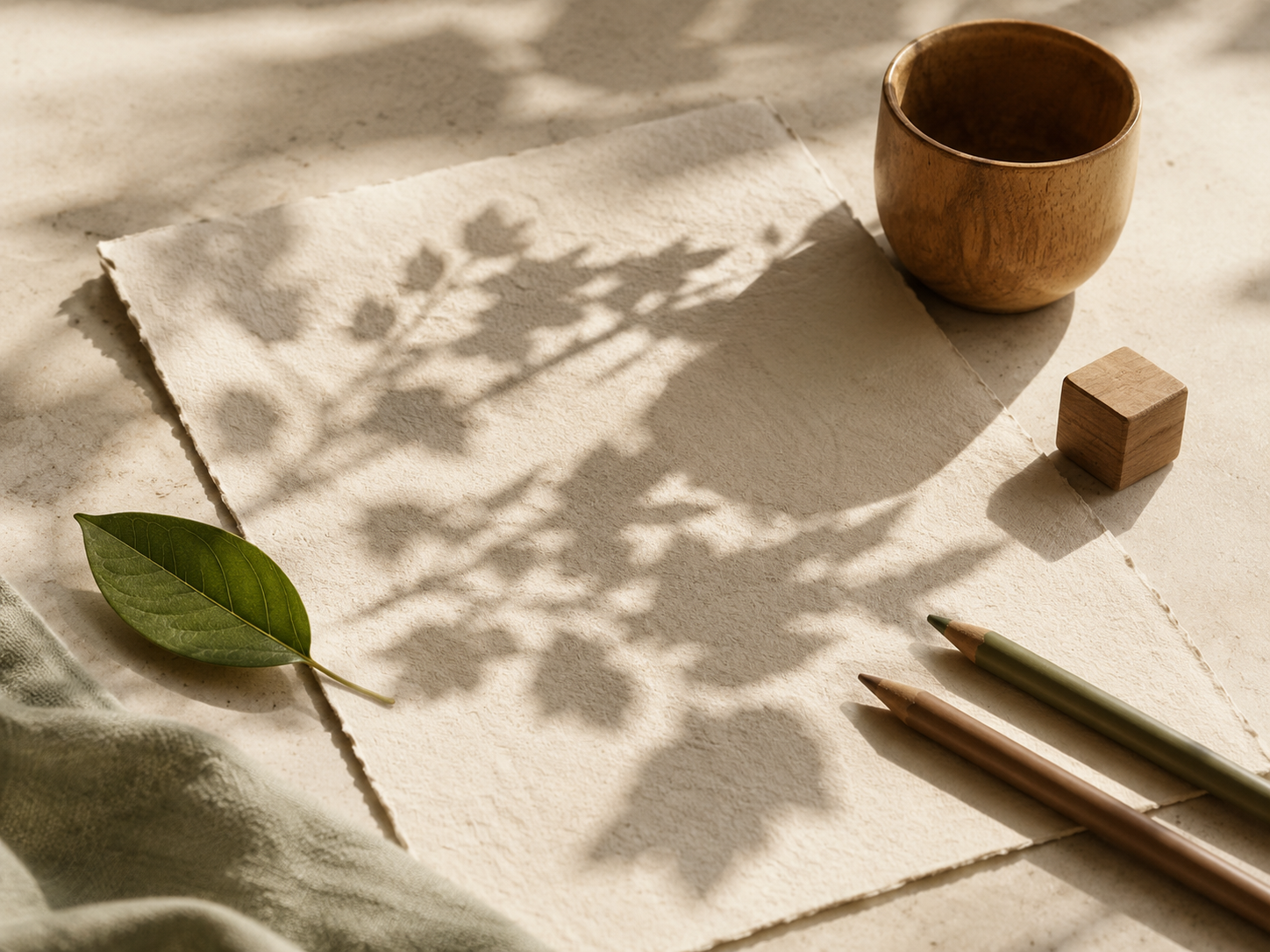
Invite your child to make a quiet page inspired by shadows.
They might draw:
- Dark patches
- Long shapes
- Small shapes
- A tree shadow
- A hand shadow
- A toy shadow
- A child and their shadow
- Soft marks beside bright marks
You can say:
Can you make a shape that feels like a shadow?
For younger children, this may be simple marks on the page.
For older children, they may want to draw an object and its shadow beside it.
Do not turn it into a lesson.
Let the page stay quiet and open.
When the page feels complete, set it aside.
Small Reflection
Simple questions help children revisit and deepen their discoveries.
Later in the day, perhaps at lunch or bedtime, ask:
What shadow did you notice today?
Or:
What made you smile outside?
For older children:
How did a shadow change when something moved?
No formal answer is needed.
The question is enough.