
![[background image] image of cozy reading nook (for an author & writer)](https://cdn.prod.website-files.com/69dbe348d0a29252603f7d2c/6a52be718f09f8fc7f9792ba_july%20r5%20cover%20image.png)
A Gentle Week, Made Simple
A calm rhythm designed to bring beauty, wonder, and meaningful work into your learning week.
This rhythm is meant to give your family a gentle shape without adding more to your plate. Use the full week, or simply choose the parts that fit your family best.
There is no need to do everything.
Follow the rhythm, not the clock.
Mid-July Weekly Rhythm
Day One
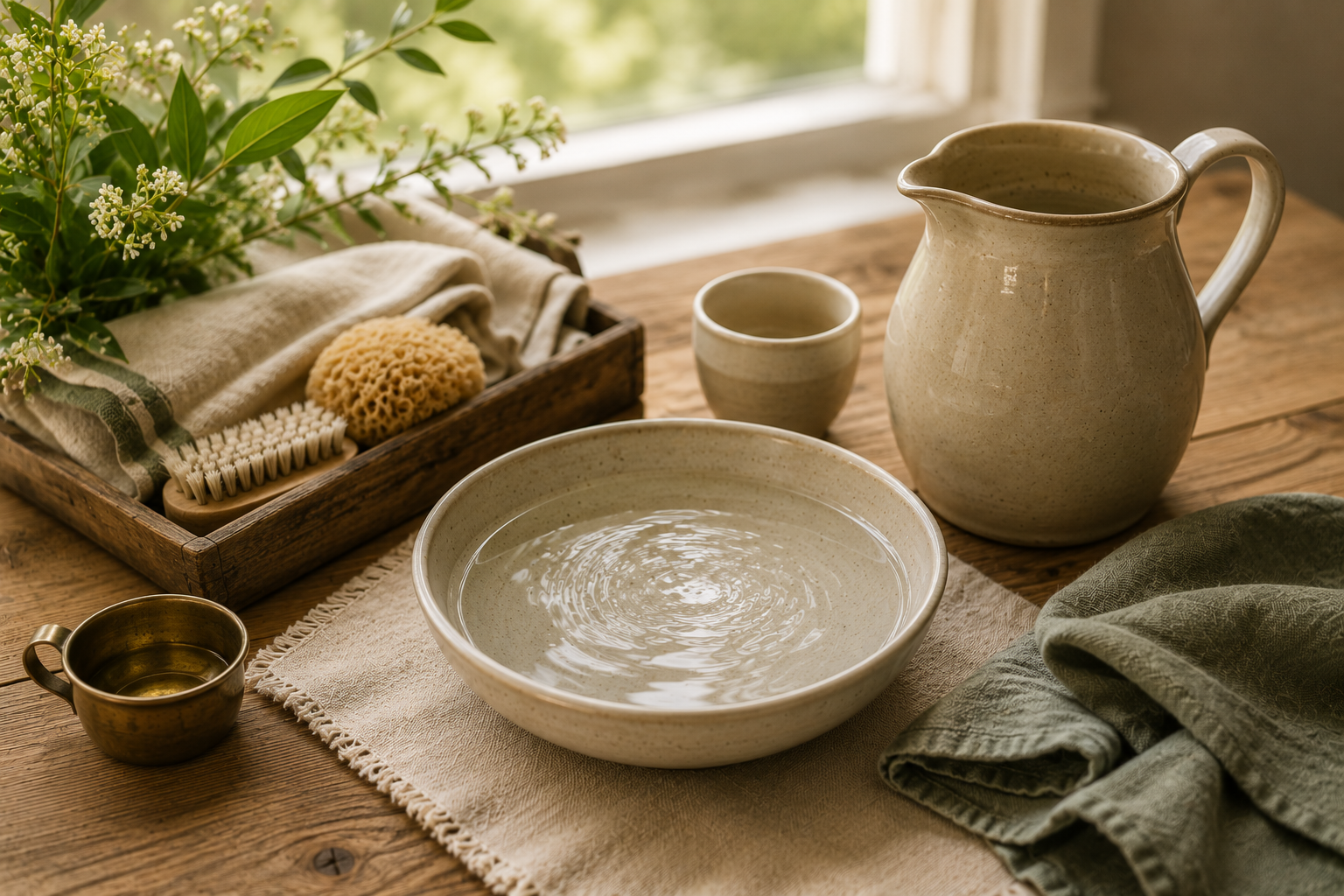
Today we pour slowly and notice how water moves.
Morning Gathering
Let this gently open the day.
Begin near a window, table, sink, porch, or quiet outdoor spot.
Place one small cup, bowl, or pitcher in the center. If it fits your day, add a little water.
Speak together:
Water pours from cup to cup,
Slowly down and filling up.
Drip and drop and fill and flow,
Little hands can help it go.
We will watch and we will see,
Water moving carefully.
Pause for a moment.
Then ask:
What can we pour slowly today?
A cup of water, small pitcher, watering can, little water at the sink.
Anything is enough.
Core Experience
Pour & Notice
A simple practical life experience for attention, coordination, and wonder.
You’ll need:
- A small pitcher, cup, measuring cup, or child-sized container
- One bowl, tray, sink, tub, or outdoor spot where water can spill
- A small towel or cloth
- Optional: a second cup or bowl for pouring back and forth
Choose a simple place where a little water is okay.
Keep the setup small.
This might be at the kitchen sink, at a table with a tray and towel, on the porch, or outside on the grass.
Pour a small amount of water into one cup or pitcher.
Invite your child to pour slowly into another cup, bowl, or container.
You can say:
Let’s pour slowly and watch what the water does.
Pause and notice together.
You might wonder aloud:
What sound does it make?
Is it fast or slow?
Does it drip or splash?
Is the cup full, half full, or empty?
What happens when we pour it back?
Let your child try again.
They might pour carefully.
They might spill a little.
They might want to pour back and forth.
They might notice bubbles, drips, sounds, or splashes.
Keep the amount of water small.
This keeps the work calm and manageable.
There is no need to teach a lesson about volume or measurement.
The pouring, watching, listening, filling, emptying, and trying again are the work.
When interest fades, invite your child to help wipe the tray, table, or floor.
The experience is complete.
Meaningful Work
Wipe & Restore
Invite your child into one small act of real work that helps care for the space after water has been used.
Choose one:
- Wipe a small spill
- Dry a tray
- Fold a damp cloth
- Carry a cup to the sink
- Empty a bowl of water outside
- Put a pitcher back on a shelf
Choose just one small task.
Move slowly.
Let your child help in a real way.
There is no need to clean everything perfectly.
One small act of care is enough.
These small acts help children feel capable, trusted, and part of the family rhythm.
Outdoor Invitation
Watch Water Move Outside
Step outside together and look for one small sign of water.
You might notice a puddle, a damp leaf, a birdbath, morning dew, or a wet stone.
Walk slowly.
You can ask:
Where do you see water?
Or:
What do you notice about this water?
Maybe it is still.
Maybe it is dripping.
Maybe it is soaking into the ground.
Maybe it has already dried.
There is no need to walk far.
There is no need to collect anything.
One small water discovery outside is enough.
Quiet Work
Make Water Marks
Simple marks, quiet attention, and gentle creativity.
You’ll need:
- Paper
- Crayons, colored pencils, or a pencil
- Optional: blue, gray, green, or any color your child chooses
Invite your child to make marks that remind them of water.
They might draw drops, lines, waves, a puddle, or a long pouring line.
You can say:
Can you make a mark that shows how water moved?
Or:
Can you draw one drip, splash, or line of water?
For younger children, any marks on the page are enough.
For older children, they may want to draw a cup, pitcher, puddle, or watering can.
There is no need for it to look like real water.
Let the page stay open and simple.
When the page feels complete, set it aside.
The work is finished.
Small Reflection
Simple questions help children revisit and deepen their discoveries.
Later in the day, perhaps at lunch or bedtime, ask:
What did we pour today?
Or:
What did the water do?
For older children:
What changed when the cup was full, empty, or poured again?
No formal answer is needed.
The question is enough.
Day Two
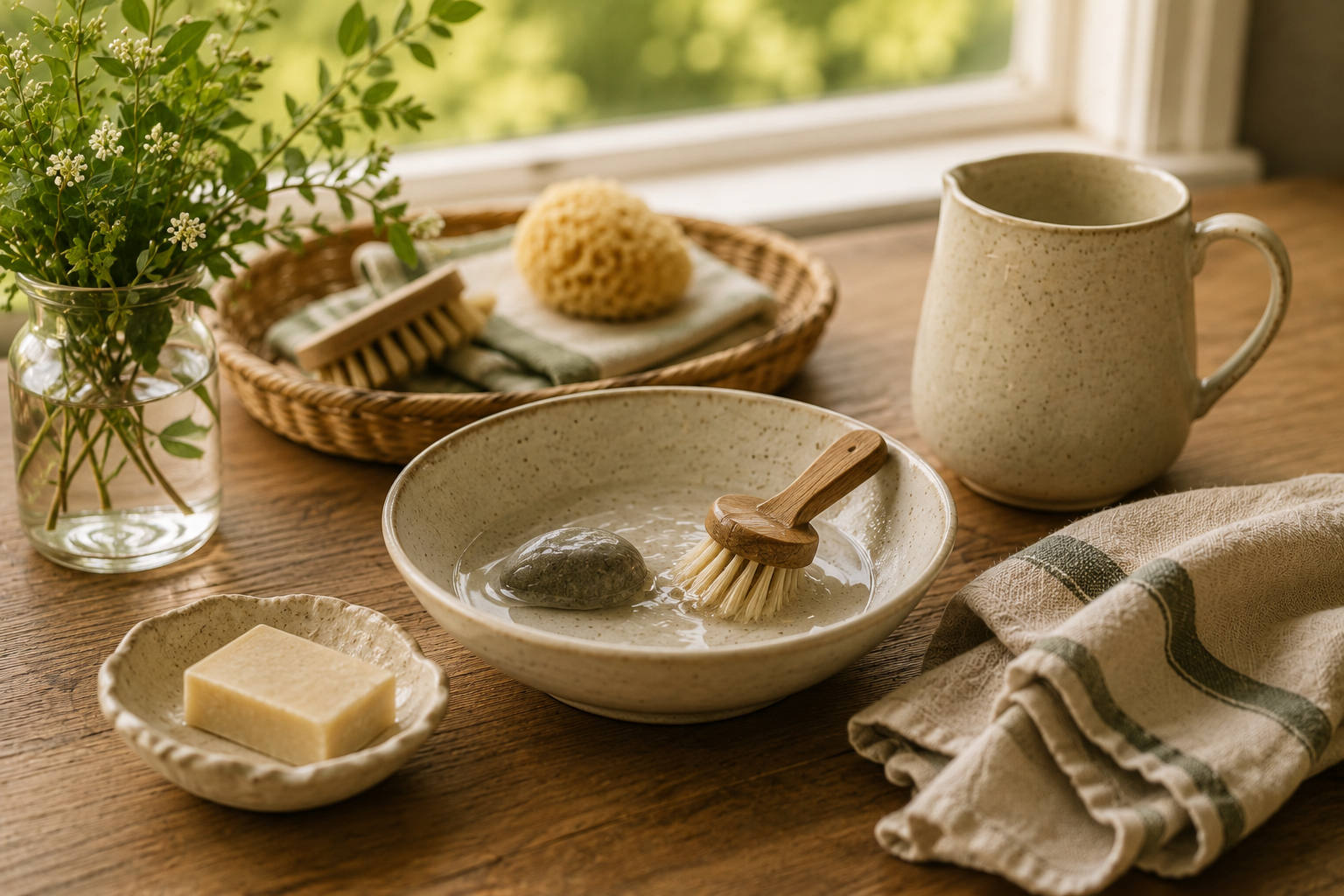
Today we use water to wash and care for simple things.
Morning Gathering
Begin near a window, table, sink, porch, or quiet outdoor spot.
Place one small cloth in the center.
If you have one simple object nearby, place it beside the cloth. This might be a stone, shell, spoon, cup, small toy animal, or piece of fruit.
Speak together:
Water washes, cloths can wipe,
Hands can care for things just right.
Stone or spoon or cup or tray,
We can wash with care today.
Slowly wipe and gently see,
Helpful hands can care with me.
Pause for a moment.
Then ask:
What is one simple thing we can wash or care for today?
A stone, shell, cup, small toy, tray, piece of fruit.
Anything is enough.
Core Experience
Wash & Care
A simple hands-on experience for practical life, attention, and care of materials.
You'll need:
- One small bowl, basin, sink, or tray
- A small amount of water
- A cloth, sponge, or small towel
- One to four simple objects to wash
- Optional: a dry towel for placing clean objects
Choose one small group of things to wash.
You might choose stones, shells, a small toy animal, a cup, a tray, a piece of fruit, or a washable outdoor object.
Keep it simple.
One object is enough.
Place the object near the bowl, basin, sink, or tray.
Invite your child to dip the cloth or sponge in water.
You can say:
Let’s wash this slowly and take care of it.
Show your child how to wipe one small part.
Then let them try.
They might wipe.
They might dip the cloth again.
They might squeeze water out.
They might turn the object over.
They might notice dirt, shine, texture, or color.
You might wonder aloud:
What changed when we washed it?
Does it feel smooth, rough, wet, or clean?
Where else does it need a little care?
Should we dry it now?
There is no need to make the object perfectly clean.
There is no need to wash many things.
The dipping, wiping, squeezing, turning, drying, and caring are the work.
When interest fades, place the object on a towel or return it to its place.
The experience is complete.
Meaningful Work
Hang, Fold, or Put Away
Invite your child into one small act of real work connected to finishing the washing.
Choose one:
- Hang a damp cloth
- Fold a dry towel
- Place a clean object on a shelf
- Carry a bowl to the sink
- Empty water outside
- Put a sponge back in its place
- Wipe the table or tray
Choose just one small ending.
Move slowly.
Let your child help in a real way.
There is no need to finish quickly.
One small act of care is enough.
These small acts help children learn that work has a beginning, middle, and gentle ending.
Outdoor Invitation
Notice Something to Care For
Step outside together and look for one simple thing that could use a little care.
It might be a dusty stone, a porch step, a small outdoor table, a watering can, or something that needs to be returned to its place.
You can ask:
Is there one thing outside we could care for?
Or:
What could we wipe, rinse, or return?
Keep it very small.
Maybe you rinse one stone.
Maybe you wipe one outdoor surface.
Maybe you return one object to its place.
Maybe you simply notice something that could be cared for another day.
There is no need to create a project.
One small act of outdoor care is enough.
Quiet Work
Draw Something We Cared For
Simple drawing, memory, and gentle creativity.
You’ll need:
- Paper
- Crayons, colored pencils, or a pencil
Invite your child to draw one thing they washed or cared for.
They might draw a stone, shell, cup, cloth, toy animal, or a few water drops.
You can say:
Can you draw one thing we washed today?
Or:
Can you make a few marks for washing, wiping, or drying?
For younger children, any marks are enough.
For older children, they may want to draw the object before and after it was washed.
There is no need to make it look exact.
The drawing is simply a quiet way to remember the work.
When the page feels complete, set it aside.
Small Reflection
Simple questions help children revisit and deepen their discoveries.
Later in the day, ask:
What did we wash or care for today?
Or:
How did we help take care of something?
For older children:
What changed after we washed it?
No formal answer is needed.
The question is enough.
Day Three
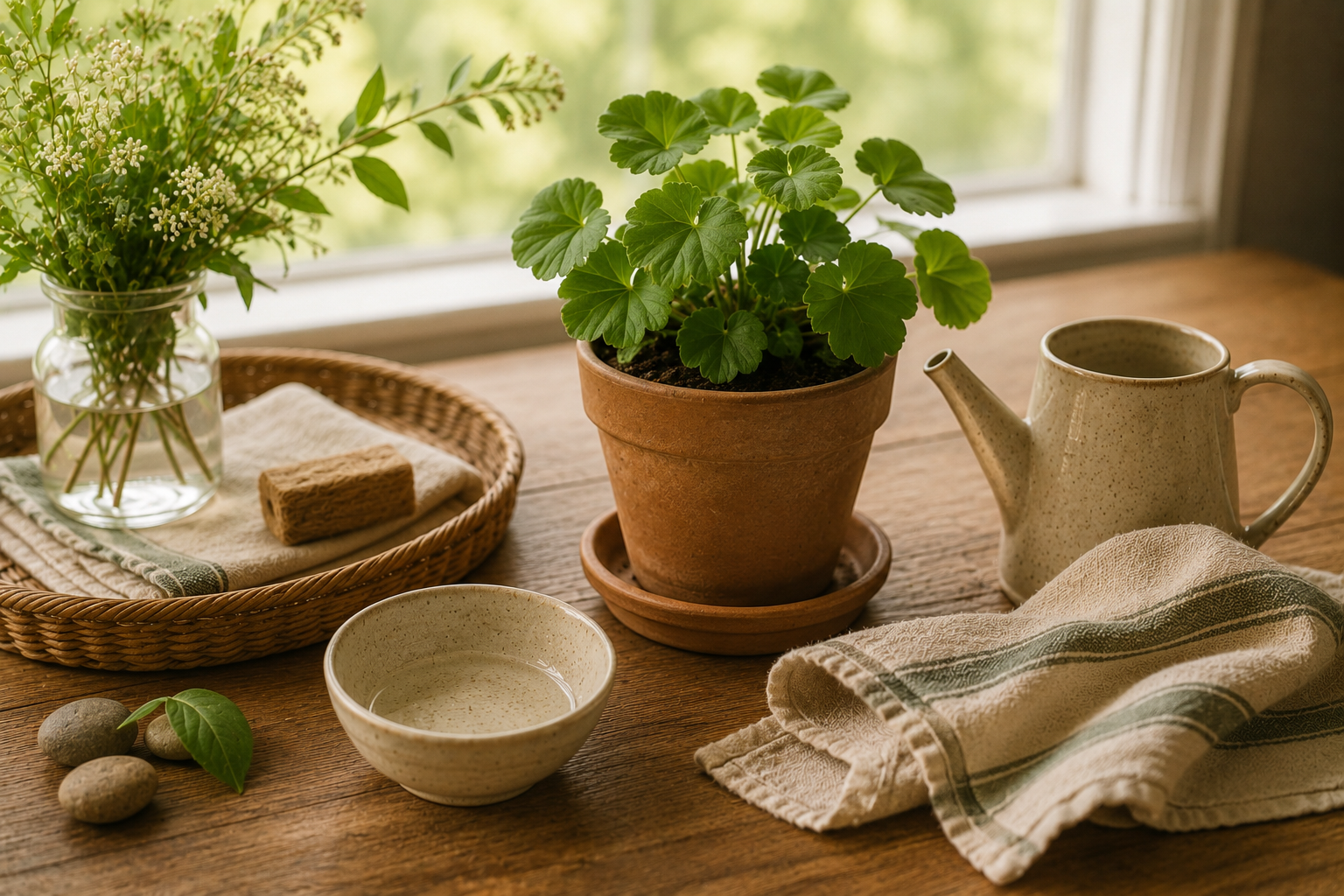
Today we use water to care for something living.
Morning Gathering
Begin near a window, table, porch, garden, or quiet outdoor spot.
Place one small cup, watering can, jar, or bowl in the center.
If you have one nearby, add a small plant, flower, leaf, or herb pot.
Speak together:
Roots below and leaves above,
Water given with care and love.
Cup or can, a gentle pour,
Just enough, not too much more.
Little hands can help today,
Giving water the careful way.
Pause for a moment.
Then ask:
What living thing could use a little water today?
A plant, flower, tree, herb pot, garden bed, vase of flowers, pet bowl with help.
Anything simple is enough.
Core Experience
Give a Drink
A gentle care experience for tending, patience, and responsibility.
You’ll need:
- A small cup, pitcher, jar, or watering can
- A small amount of water
- One living thing to water, such as a plant, flower, herb pot, tree, garden bed, or vase of flowers
- Optional: a cloth for wiping drips
Choose one living thing that can receive a little water today.
This might be a houseplant, flower pot, herb plant, tree, garden bed, vase of flowers, or pet water bowl with a parent's help.
Keep the amount of water small.
You can say:
Today we are going to give this plant a drink.
Or:
Let’s help this living thing with a little water.
Invite your child to carry the water carefully.
Show them where to pour.
You might say:
We pour near the soil.
We go slowly.
We give a little, then pause.
Let your child pour.
They might pour carefully.
They might need help holding the cup.
They might notice the water disappearing into the soil.
They might want to touch the damp earth.
They might notice leaves, roots, petals, stems, or shade.
You might wonder aloud:
Where did the water go?
Does the soil look dry or damp?
Did it need a little water or more water?
How can we tell when to stop?
There is no need to explain plant science.
There is no need to water every plant.
One living thing given water with care is enough.
The carrying, pouring, pausing, noticing, and tending are the work.
When you are finished, return the cup or watering can and wipe any drips.
The experience is complete.
Meaningful Work
Tend One Small Thing
Invite your child into one small act of real work connected to caring for something living or growing.
Choose one:
- Water one plant
- Refill a vase with help
- Remove one dry leaf
- Carry a watering can
- Wipe drips from a windowsill
- Place a flower in a small cup of water
- Fill a pet water bowl with parent help
Choose just one small task.
Move slowly.
Let your child help in a real way.
There is no need to tend everything.
One living thing cared for is enough.
These small acts help children feel connected to the living world around them.
Outdoor Invitation
Look for Water and Dryness
Step outside together and look for signs of water, dryness, or growth.
You might notice dry soil, damp soil, a plant in the sun, a plant in the shade, or a place where water has soaked in.
Walk slowly.
You can ask:
What looks dry?
Or:
What looks like it already had water?
Maybe you water one plant.
Maybe you simply notice.
Maybe you decide something does not need water today.
There is no need to fix everything.
Looking with care is enough.
Quiet Work
Draw a Living Thing
Simple drawing, memory, and gentle creativity.
You’ll need:
- Paper
- Crayons, colored pencils, or a pencil
Invite your child to draw one living thing that received water, or one living thing they noticed outside.
They might draw a plant, flower, tree, leaf, pot, watering can, or a few drops near the soil.
You can say:
Can you draw one living thing we cared for today?
Or:
Can you draw where the water went?
For younger children, simple marks are enough.
For older children, they may want to add a stem, leaf, flower, roots, water drops, or one word.
There is no need for it to look like a real plant.
This is a quiet way to remember the care.
When the page feels complete, set it aside.
Small Reflection
Simple questions help children revisit and deepen their discoveries.
Later in the day, perhaps at lunch or bedtime, ask:
What did we give water to today?
Or:
How did we care for something living?
For older children:
Where did the water go after we poured it?
No formal answer is needed.
The question is enough.